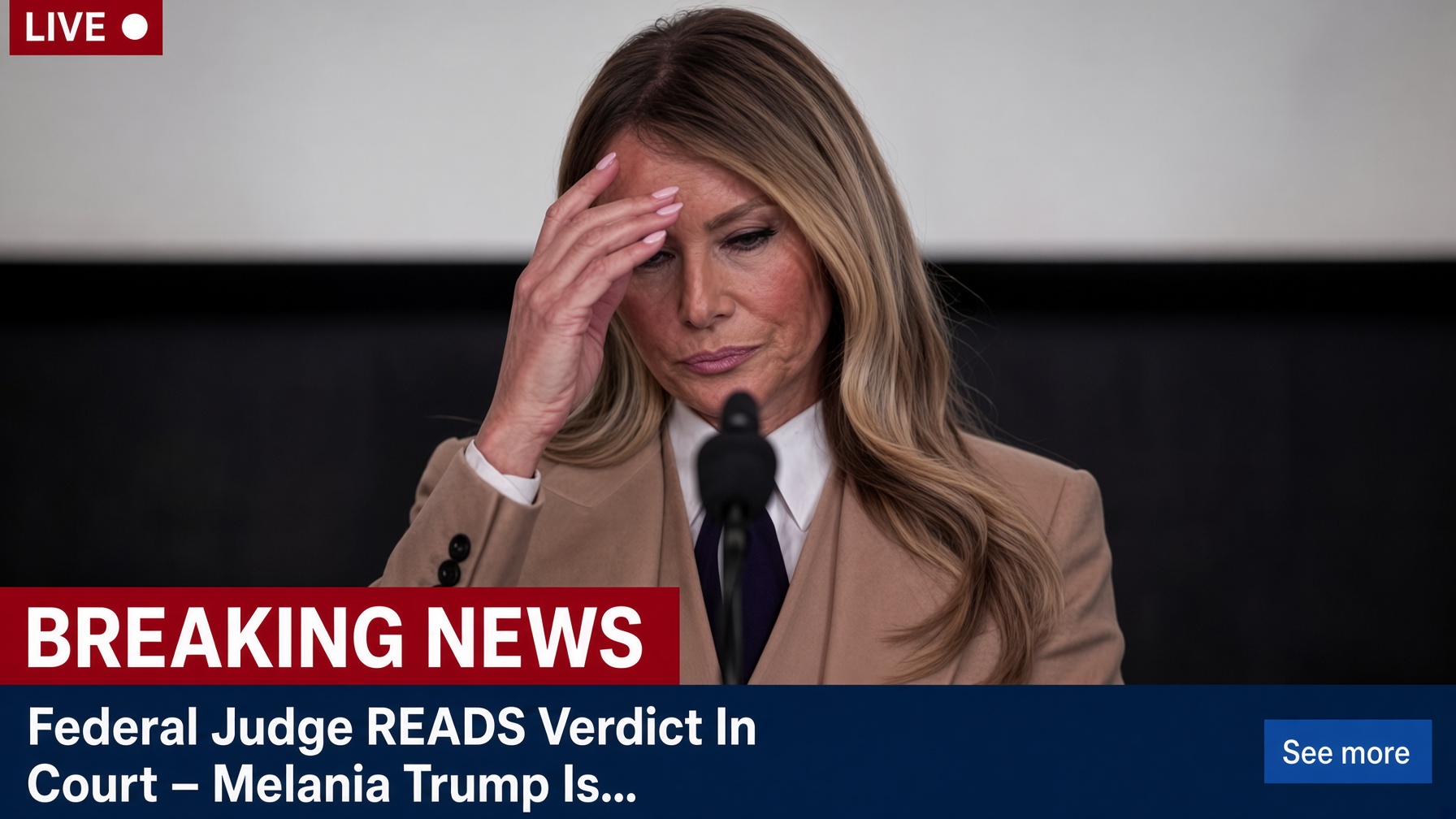
NEW YORK — A federal judge has dismissed author and journalist Michael Wolff’s lawsuit against first lady Melania Trump, declining to determine whether statements involving Trump and Jeffrey Epstein were defamatory or protected speech.
U.S. District Judge Mary Kay Vyskocil of the Southern District of New York issued the 45-page ruling on May 22, 2026, concluding that Wolff’s preemptive lawsuit was not the appropriate vehicle for resolving the underlying defamation dispute.
The ruling did not determine whether Wolff defamed Melania Trump. Instead, the judge concluded that the dispute should proceed through ordinary litigation procedures rather than through Wolff’s effort to obtain a declaration about a potential defamation claim before that dispute was litigated in the usual manner.
The case, Wolff v. Trump, was filed under docket number 1:25-cv-10752. The federal court acknowledged that it had subject-matter jurisdiction because Wolff and Trump are citizens of different states and the threatened dispute involved a potential $1 billion claim. However, Vyskocil declined to exercise that jurisdiction under principles of prudential abstention.
Dispute Began With Epstein-Related Statements
The legal battle began after Wolff made public statements concerning Melania Trump and Jeffrey Epstein, the financier and convicted sex offender who died in federal custody in August 2019 while awaiting trial on federal sex-trafficking charges.
Trump’s attorneys accused Wolff of making defamatory statements and demanded that he retract them. According to court records and reporting on the case, Trump’s legal team warned that she could seek $1 billion in damages if Wolff did not retract the statements and apologize.
Rather than waiting for a conventional defamation lawsuit, Wolff filed his own action seeking declaratory relief. His lawsuit sought a determination that his statements were not defamatory and challenged the threatened legal action.
The case was initially filed in New York state court before being removed to federal court in December 2025. Federal court records show that Melania Trump subsequently sought dismissal or transfer of the case.
Judge Declines to Decide the Merits
Vyskocil’s ruling focused primarily on procedure rather than the truth or falsity of the disputed statements.
The judge wrote that the parties had a genuine dispute but said Wolff could not use a preemptive federal lawsuit to obtain a ruling that he would prevail if Trump later pursued a defamation claim.
Vyskocil also criticized what she described as an “inappropriate level of tactical gamesmanship” surrounding the litigation. She concluded that the federal court should not become the forum for resolving the dispute through Wolff’s preemptive strategy.
The court therefore dismissed the case without reaching the central First Amendment and defamation questions.
That distinction is significant. The decision does not establish that Wolff’s statements were defamatory, nor does it establish that they were constitutionally protected. Instead, those substantive questions were left for litigation in the appropriate proceeding.
Florida Litigation Changes the Legal Picture
The dispute also involves proceedings in Florida.
Bloomberg Law reported that Melania Trump had already brought a related action in Florida, where she maintains her primary residence. Vyskocil concluded that Wolff could not effectively use the New York action to litigate defenses and potential counterclaims ahead of that proceeding.
That Florida litigation was an important factor in the federal judge’s decision to decline jurisdiction in New York.
The result means that the May ruling was not a final judicial determination of the allegations surrounding Wolff’s statements about Trump and Epstein. Instead, the federal court sent the parties back toward the ordinary litigation process.
Wolff Appeals the Federal Dismissal
Wolff has appealed Vyskocil’s ruling to the U.S. Court of Appeals for the Second Circuit.
The appeal, Wolff v. Trump, is docketed as No. 26-1674. The Second Circuit opened the appeal in June, and a July scheduling order set October 1, 2026, as the deadline for Wolff’s opening brief.
As of September 2026, the appeal remains pending.
The appellate court could address whether Vyskocil properly declined to exercise federal jurisdiction, but the existing district-court ruling itself did not resolve whether the challenged statements constituted defamation.
For now, the legal dispute remains active on multiple fronts. The May dismissal removed Wolff’s preemptive New York federal lawsuit from the district court, but it did not settle the broader conflict between the author and the first lady.
The central questions surrounding the disputed statements therefore remain unresolved, with further proceedings potentially determining how the competing claims will be litigated and whether any court ultimately reaches the underlying defamation issues.