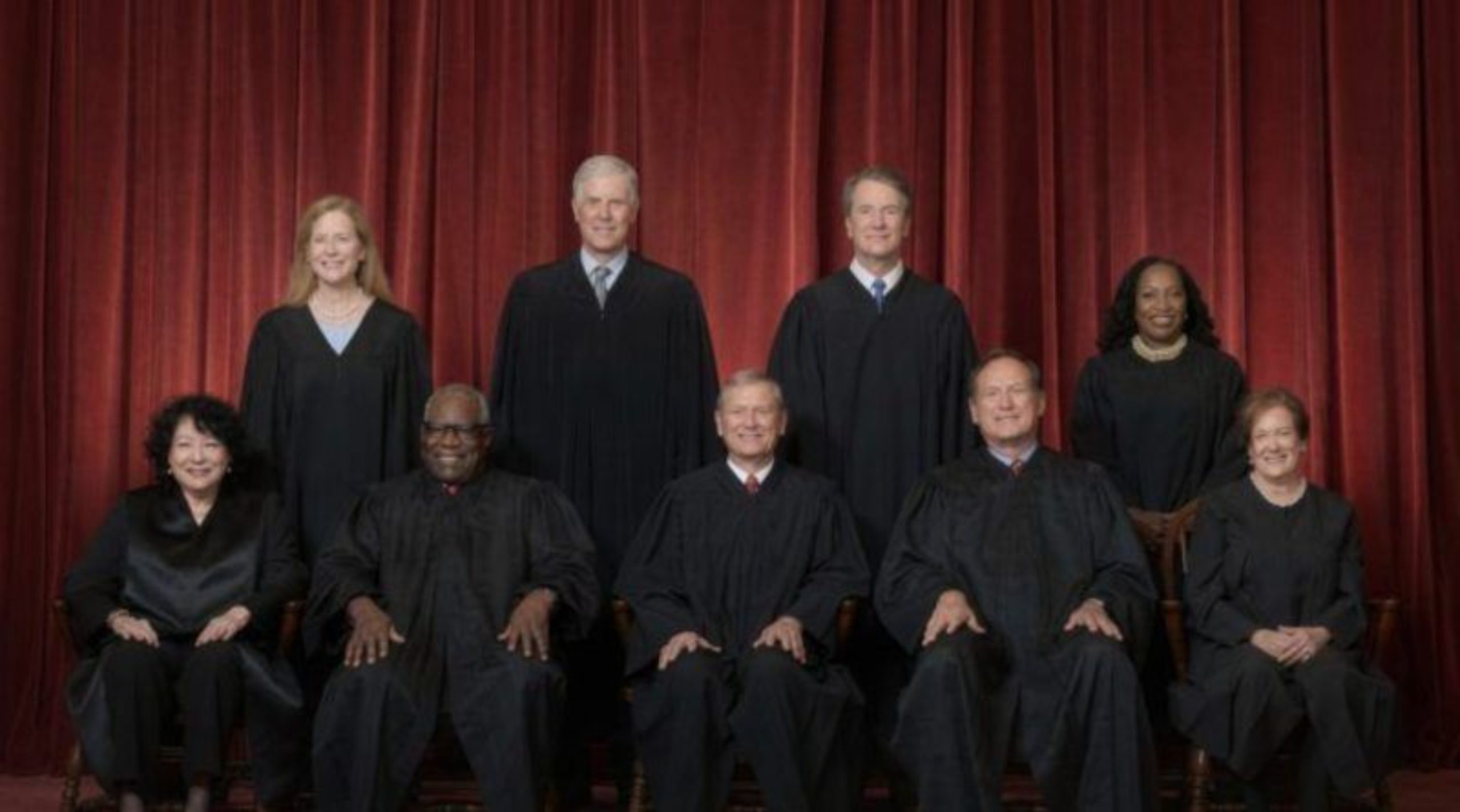
The U.S. Supreme Court declined Monday to hear a free speech case brought by a former Indiana high school student challenging her school district’s policy that blocked her from posting anti-abortion flyers on school walls.
The justices rejected the appeal without comment, leaving intact a lower court ruling that found the Noblesville Schools district’s restrictions on political content did not violate First Amendment protections. The student, identified as “E.D.” in court documents because she was a minor when her parents filed the 2021 lawsuit, had sought to post flyers containing photographs and anti-abortion messages on school property.
What Led to the Dispute
E.D. founded Noblesville Students for Life as a freshman, a local chapter of Students for Life of America, after the school approved the group’s formation. The school allowed her to set up a table at an activities fair and wear a shirt displaying the slogan “I am the pro-life generation.”
However, administrators blocked flyers that included images of students at the Supreme Court building holding signs reading “I Reject Abortion,” “Defund Planned Parenthood,” and similar messages. According to court papers, a school official stated that flyers on school walls should contain only the club’s name, meeting location, time and date.
The school’s policy “categorically prohibited political content in flyers posted on its walls,” according to court documents. When E.D. and her mother sought approval from another administrator for the same flyer, school officials expressed concerns about parental involvement and the group’s student-led status.
The school subsequently suspended the club for the remainder of the semester. E.D. then filed the lawsuit, represented by the Alliance Defending Freedom, a conservative legal organization.
The Legal Framework
The case hinged on a 1988 Supreme Court precedent, Hazelwood School District v. Kuhlmeier, which established that schools can restrict student speech in non-public forums or when speech conflicts with the school’s educational mission. The lower court determined the Noblesville policy fell within these established guidelines.
By declining to hear the case, the Supreme Court left the lower court ruling in place and did not address broader questions about student political speech and school content restrictions.
What This Means
The decision allows schools to maintain restrictions on political messaging in student materials without facing federal court scrutiny. The rejection leaves unanswered questions about the scope of student free speech protections and how schools should balance content policies with First Amendment rights.
This story has been updated. CNN’s legal affairs unit contributed to this report.