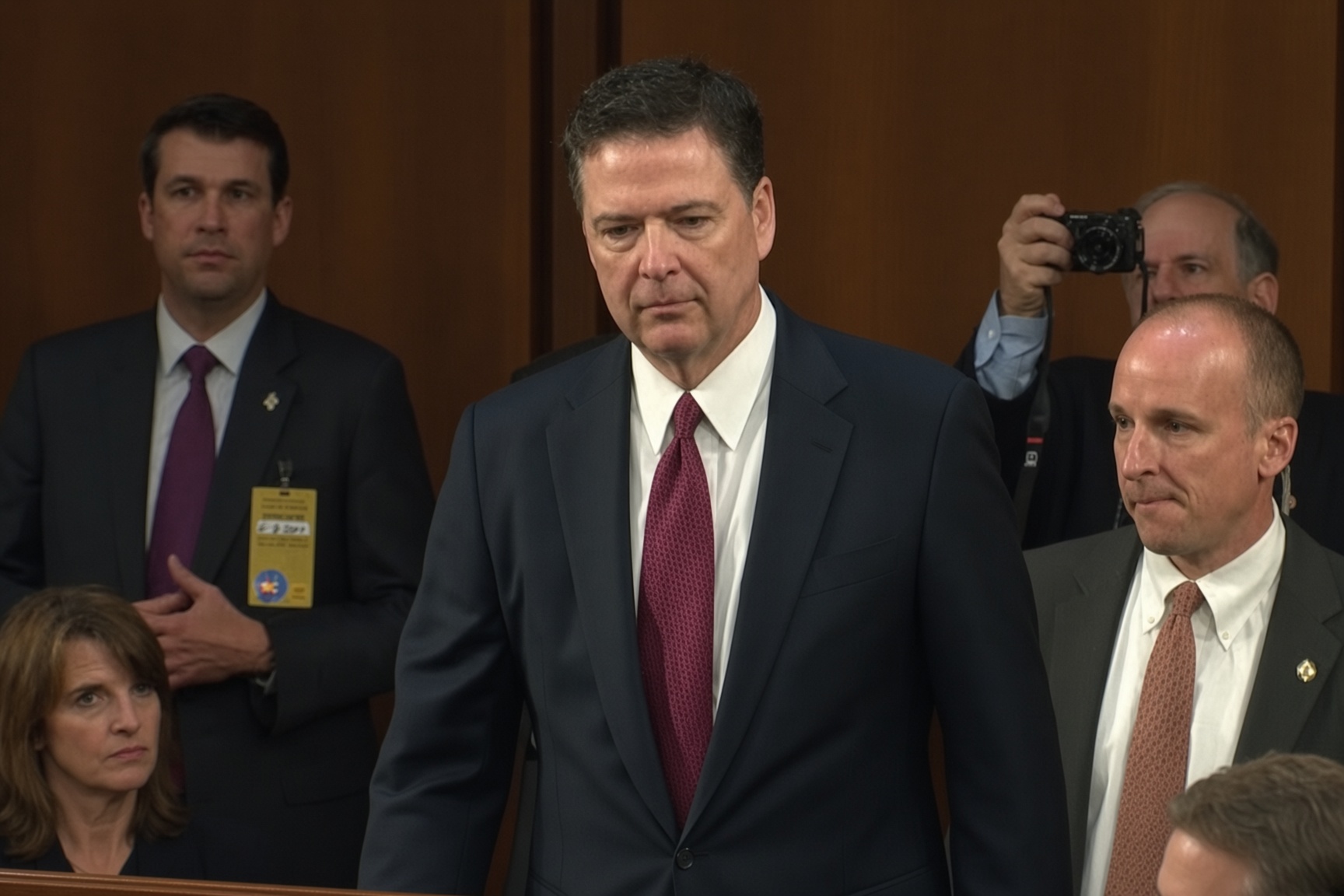
A federal judge ruled Friday that outside organizations and individuals cannot file friend-of-the-court briefs in the criminal case against former FBI Director James Comey.
U.S. District Judge Louise W. Flanagan issued the order rejecting amicus curiae briefs from parties not directly involved in the case. “Defendant and the government are ably represented by competent counsel,” Flanagan wrote in her decision.
What the Ruling Means
The decision limits participation in one of the highest-profile criminal cases involving a former senior federal law enforcement official. Amicus curiae briefs typically allow outside parties with relevant expertise or interest to present legal arguments to judges, even though they are not litigants in the case.
Such filings are common in federal appeals courts and the U.S. Supreme Court but rarely used in federal district courts. Flanagan’s approach differs from another 2025 case involving Comey, when numerous outside organizations sought to file friend-of-the-court briefs before that prosecution was dismissed.
Legal Experts Weigh In
Legal scholars say the ruling is unusual but not without precedent. Scott Holmes, a law professor at North Carolina Central University, said district court judges often have practical reasons for limiting outside participation. “I can imagine that the court is worried about the floodgates opening, and everybody who wants to weigh in on this does,” Holmes said.
Holmes acknowledged that friend-of-the-court briefs can provide valuable legal analysis and research. Carl Tobias, a law professor at the University of Richmond, also described the ruling as uncommon, noting that judges frequently find such briefs useful because they come from individuals with specialized expertise.
The Case Ahead
The underlying criminal case centers on allegations that Comey threatened the president through a 2025 social media post. Comey has denied wrongdoing.
Friday’s order represents an early procedural ruling that signals the court intends to keep litigation focused on arguments presented by prosecutors and the defense rather than inviting broader public participation.
This story has been updated. CNN’s legal team contributed to this report.