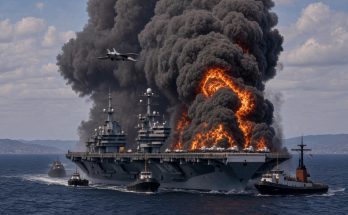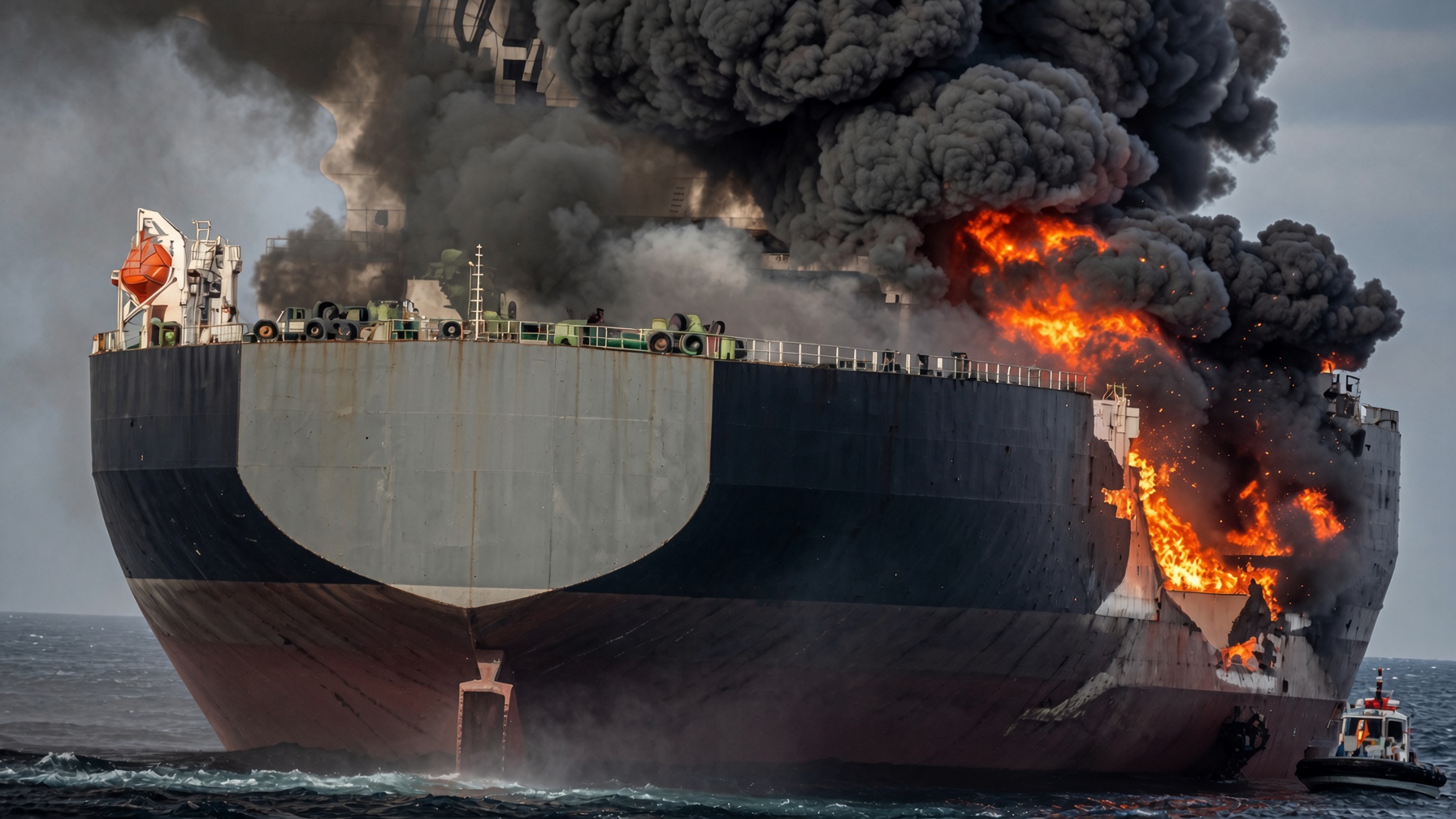
The guided-missile destroyer USS Spruance intercepted the Iranian-flagged cargo vessel TOUSKA in the Gulf of Oman after the ship disregarded multiple warnings to alter course near the Strait of Hormuz.
The interdiction occurred as the cargo ship attempted to transit through waters where the United States had established a naval presence. The incident marked an escalation in maritime tensions in one of the world’s most strategically important shipping corridors.
Officials said the TOUSKA’s crew received six hours of repeated warnings before the USS Spruance took action. Despite the communications, the vessel continued its course without changing direction.
What Happened
The USS Spruance fired its 5-inch gun at the TOUSKA’s engine room, disabling the ship, according to statements from military officials. U.S. Marines subsequently boarded the vessel and assumed control of the cargo ship.
The boarding team secured the ship without reported casualties or injuries. The vessel remained under American custody following the interdiction operation.
Strategic Implications
The Gulf of Oman represents a critical chokepoint for global maritime commerce, with millions of barrels of oil passing through daily. Control of the Strait of Hormuz and surrounding waters holds significant geopolitical weight for regional stability.
Naval operations in the region have intensified in recent months as tensions between the United States and Iran continue to escalate. The incident underscores the military’s commitment to maintaining freedom of navigation in international waters.
This story has been updated. CNN’s international affairs team contributed to this report.